What is a fixed asset register?
Every business owns assets that are essential to its operations. From computers and laptops to machinery, tools, vehicles and specialist equipment, these assets represent a significant investment. However, without an effective system to record them, businesses can lose track of what they own, where assets are located, who is responsible for them and their associated capital value. As businesses grow, assets are often moved between locations, departments or employees. Without accurate records, equipment can be lost, duplicated or overlooked.
This is where a fixed asset register- a record of all the long-term physical assets a business owns- becomes invaluable. Without one, the company balance sheet does not accurately reflect the true value of what it owns, depreciation can be wrongly calculated and capital investment decisions misinformed. A fixed asset register helps organisations track, manage and account for valuable equipment throughout its lifecycle. Assets should also be security marked to deter theft, handling of stolen goods and assist in proving ownership if found.
What is classed as an asset?
Typical assets include:
- Computers, laptops and mobile phones
- Office furniture
- Machinery and equipment
- Vehicles
- Tools and plant equipment
- IT and audio-visual hardware
- Medical or laboratory equipment
By maintaining a central record, businesses always know what assets they own, where they are located and who is responsible for them.
Why is a fixed asset register important?
A fixed asset register helps organisations to:
- Reduce loss and theft
- Improve accountability
- Track asset locations
- Simplify audits
- Support insurance claims
- Plan maintenance and replacements
- Improve budgeting and purchasing decisions
- Maintain accurate financial records
What information should it include?
Most fixed asset registers contain:
- Asset description
- Serial or asset tag number
- Purchase date and cost
- Current location
- Assigned employee or department
- Asset value and depreciation details
- Maintenance history and warranty information
Applying asset labels or QR codes helps link physical assets directly to their records, making audits faster and more accurate.
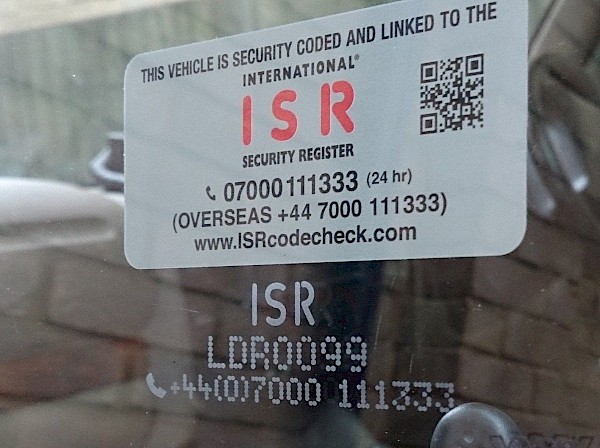
Our asset marking labels can either link the asset to the International Security Register (ISR) where the details can be verified 24/7, 365, or be used purely internally for a company’s own records.
Retainagroup asset marking and the International Security Register (ISR)
Registering marked items to the International Security Register (ISR) adds an extra layer of protection. The ISR is our secure database that records ownership of marked assets. Each unique asset code can be verified any time of day or night by police, insurers and authorised users, helping to prove ownership, support recovery if an item is lost or stolen, and deter theft by making assets harder to sell on.
Who needs a fixed asset register?
Any organisation that owns valuable equipment can benefit from a fixed asset register, including:
- Manufacturers
- Construction companies
- Schools and universities
- Healthcare providers
- Public sector organisations
- Office-based businesses
Even small businesses owning a single piece of vital equipment can benefit
Fixed asset register vs inventory
A fixed asset register tracks long-term assets used by the business, such as computers, vehicles and machinery.
An inventory system tracks stock that is bought and sold, such as retail products, raw materials or finished goods, which would not appear on a fixed asset register.
Many organisations require both systems.
How do you maintain a fixed asset register?
While some businesses use spreadsheets, dedicated asset management software offers greater control through:
- Centralised asset records
- QR code scanning
- Audit tools
- Maintenance tracking
- Automated reporting
- Multi-site management
Regular asset audits and durable asset labels help ensure records remain accurate.
The benefits of asset marking
A fixed asset register is most effective when combined with asset marking. Labels, QR codes and tamper-evident tags create a direct link between physical assets and digital records, improving visibility and reducing losses. Our asset marking systems apply a permanent, tamper-resistant code linked to the International Security Register, making items and equipment instantly identifiable and traceable.
A fixed asset register gives businesses greater control over their assets by improving visibility, accountability and financial accuracy. Combined with effective asset marking, it provides a strong foundation for efficient asset management and long-term business planning.
Talk to us about asset marking.
By applying a permanent, tamper-resistant code linked to the International Security Register (ISR), assets become instantly identifiable and traceable. This makes them less attractive to thieves, harder to sell on if stolen, and far easier for law enforcement, police, insurers and businesses to recover.